


Backspin Games: Earn Money
4.51.65K Reviews
App Specs
- Version
- 1.3.3
- Updated On
- License
- Free
- Downloads
- 500,000+
- Developer
- Backspin Games SL
- Categories
- Casual
- Platform
- Android
Screenshots
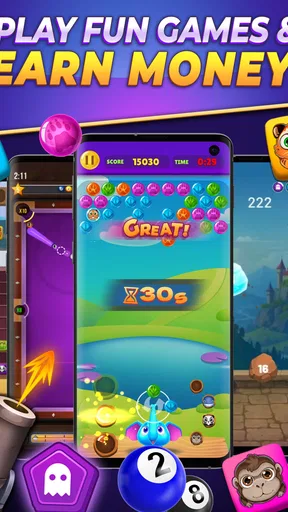
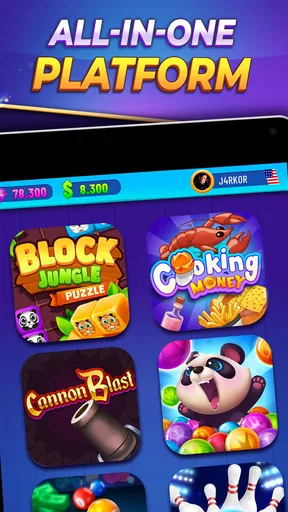

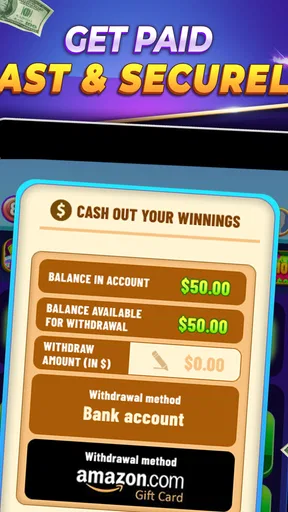

 Analysis by AppCompare
I went into Backspin Games: Earn Money expecting a lightweight casual game with a financial hook, but its appeal is more specific than that. The central idea is simple: you play games against real opponents, try to perform better, and keep coming back because a successful session may lead to a real prize. That creates a very different feeling from a normal casual title, where the reward is usually a score, an unlocked item, or the satisfaction of clearing a level.
My first impression was that the game is easiest to understand when viewed as a repeating loop: make a move, see how it affects the contest, find out whether your performance was good enough, and then decide whether another attempt is worth your time. The action itself is only one part of the experience. The feedback after that action, the expectation of a reward, and the decision to start again are what give this game its identity.
It is a free casual game from Backspin Games SL, available for players using Android 7.0 or later. The mature age classification matters here because this is not just a harmless time filler; the possibility of earning money changes how I approach each session. I would not recommend treating it like guaranteed income. I see it more as a competitive entertainment app where prizes are part of the motivation.
How the first action sets the tone
The first thing I would tell a new player is to slow down before chasing a result. In an ordinary casual game, starting immediately is usually fine because a failed round costs little beyond a few seconds. Here, the presence of real opponents and prizes makes attention more important. I found the experience more enjoyable when I treated the opening round as a way to understand the pace, the type of decisions being rewarded, and how much concentration a session demands.
That first action is also where the game separates itself from familiar alternatives. A standard puzzle, arcade, or reflex game lets me compete against a fixed challenge or my own previous score. Backspin Games: Earn Money adds another person to the equation. The opponent gives every action more weight, because a good move is not merely progress through a level; it is part of a contest.
I like that this creates an immediate reason to stay focused. There is less room for the half-attentive play I often use with casual games while waiting for a bus or watching television. If I am going to play against another person, I want to be present. That makes the app a better fit for short periods when I can concentrate than for background play.
At the same time, this is the first important limitation. Anyone looking for a completely relaxed game may find the competitive framing tiring. The mature rating is another reminder that the app is aimed at adults rather than children. I would keep it away from younger players and would also avoid presenting it as a substitute for work or a dependable way to make money.
Worth Reading Before You Choose

EA SPORTS FC Mobile 26 Is a Bigger Football Game, but It Takes Time

Flipboard Shows What News Apps Must Do Beyond the Feed

Switching to Android Auto Means Rethinking Your Driving Routine

Google Calendar Makes a Crowded Week Easier to Manage

Ludo King Makes the Most of the Minutes Between Plans

Baby Panda World Brings Quick Play to Modern Phones, but Its Game Library Feels Busy
The developer, Backspin Games SL, has positioned the experience around the contest rather than a long narrative or a large progression system. That focus is useful because I can understand the reason to play quickly. I do not need to invest in a complicated fictional world before the main point becomes clear: perform well against another player and see what the outcome brings.
Why the opponent changes casual play
Playing against a real opponent changes my relationship with mistakes. In a conventional casual game, I can experiment freely and restart without thinking much about it. Here, a careless decision can feel more costly because it may affect the result of the entire contest. That pressure can be exciting, especially when the action is easy to follow, but it can also make a short session feel more serious than the category suggests.
My practical advice is to use the opening attempts to learn your own habits. Do you rush when the pace increases? Do you make better decisions after a few seconds of observation? Do you lose focus near the end of a contest? Recognizing those patterns is more valuable than simply playing repeatedly without changing anything. The app rewards attention, but it also exposes poor routines quickly.
This is one of the less obvious strengths of the game: the competitive format gives casual play a small layer of self-management. I am not only asking whether I enjoy the game. I am asking whether I can stay disciplined when another player and a potential prize are involved. That makes the experience more engaging than many disposable games, although it also means it is not equally comfortable for everyone.
The feedback rhythm keeps the loop alive
For me, the most important part of the experience is the rhythm between action and feedback. I want to know whether a decision helped, whether I am keeping pace, and whether the contest is still within reach. When that information arrives clearly, the game feels active even during a short session. When the result feels distant or difficult to interpret, the prize idea becomes more prominent than the play itself.
This rhythm is what stops the app from being just a promise of rewards. A reward alone would not be enough to hold my attention if the actual game felt flat. The contest has to provide its own small moments of tension: a strong performance, a mistake, a recovery, or the realization that another player is setting a faster pace. Those moments give the session a shape before the final outcome appears.
I also found that feedback changes how I decide whether to continue. If I lose but understand why I lost, another attempt feels reasonable. I can adjust my timing, concentration, or approach. If I lose and cannot identify anything useful from the contest, restarting feels more like chasing an outcome. That distinction matters for anyone who is sensitive to repetitive play.
One useful habit is to pause mentally after each contest instead of pressing forward automatically. Ask what actually happened. Was the opponent stronger, or did I give away the result through rushed actions? Did I enjoy the game itself, or was I focused only on the prize? This short check makes the loop healthier and helps prevent a string of unplanned sessions.
What the prize changes—and what it does not
The reward element is the reason many people will try this game, and I understand the appeal. Winning a casual contest feels more meaningful when the result may involve real money rather than only an in-game badge. That possibility gives even a brief session a clear purpose. It also makes the game stand out from the many free casual alternatives built entirely around scores, streaks, or cosmetic progress.
Still, I think the prize should be treated as an extra layer, not as the only reason to open the app. A player who dislikes the underlying contests will probably become frustrated, because no reward concept can make every round enjoyable. The strongest use case is someone who already likes quick competitive games and sees the prize as a bonus for performing well.
There is a practical trade-off here. The possibility of earning can make a win more satisfying, but it can also make a loss more irritating. In a regular casual game, I can close the app after a poor round and feel that I lost only time. In this setting, I may be tempted to play again immediately to recover the feeling of being close. That is why I would set a personal limit before starting, especially if I am tired or already distracted.
I would also read the in-app instructions carefully before committing serious attention to the reward side. The important questions for any prize-based game are straightforward: how contests work, what counts as a win, how rewards are handled, and what conditions apply to participation. I would not assume that the store summary alone explains every practical detail. Taking a moment to understand the rules is part of playing responsibly.
The mature rating supports this cautious approach. I do not see the app as suitable for children, and I would be careful recommending it to anyone who tends to chase losses or treat games as a source of income. For a relaxed adult player who can keep entertainment and finances separate, the prize mechanic adds tension. For someone looking for dependable earnings, it is the wrong category entirely.
The everyday scenario where it makes sense
A realistic use case for me would be a short break after finishing a task, when I have enough time to focus on one competitive session but do not want to begin a large game. I could open the app, play a contest, review the result, and stop if the experience did not feel worth continuing. That is a better fit than using it during a rushed commute or while multitasking, because divided attention works against the main strength of the app.
Another suitable moment would be playing with a friend nearby and comparing how each person approaches the contests. Even when we are not directly sharing a match, the competitive idea gives us something to discuss: who stays calm, who rushes, and who is more willing to try again. That social conversation is a more grounded benefit than simply watching a balance or result screen.
On the other hand, I would skip it during an important work break if I knew I had only a minute or two. The game’s loop needs enough time for action, feedback, and a deliberate decision about whether to reset. Opening it in a hurry makes it easier to continue automatically or to leave a session feeling unfinished.
Resetting the session without losing control
The reset is where the design becomes psychologically interesting. After a result, the app gives me a simple choice: accept what happened and stop, or begin another contest with the hope of doing better. That decision is the real gateway to the next session. The game does not need a complicated progression system to create replay value; the previous outcome itself supplies the reason to return.
A close loss is especially powerful in this loop. It can make another attempt feel justified because improvement seems within reach. A win can do the same thing in a different way, since I may want to test whether I can repeat the performance. The danger is that both outcomes can encourage immediate replay. I prefer to make the reset decision before emotion takes over.
My approach is to define a stopping rule. I might stop after a satisfying win, after a fixed number of contests, or whenever I notice that I am replaying only because I disliked the previous result. This is not a criticism of the game alone; it is a useful response to any competitive reward-based format. The app is more enjoyable when I choose the next session rather than feeling pulled into it.
This reset structure is also why I would not compare the game directly with a traditional idle app. Idle games are built around passive accumulation and frequent check-ins. Backspin Games: Earn Money asks for active performance against another person. A puzzle game may offer deeper planning, while a reflex game may provide faster action, but this title combines competition with the possibility of a real prize. That combination is its main distinction, not a broad collection of casual features.
Who should try it and who should skip it
I would recommend it to adults who enjoy short competitive games, can concentrate for the duration of a contest, and want more consequence than a personal high score. It is particularly suited to players who like reviewing a result and adjusting their approach instead of treating every round as disposable. The free entry makes it easy to see whether the core loop suits you before deciding how much time you want to give it.
I would skip it if my main goal were a calm, offline-style distraction with no pressure. I would also choose a conventional casual game instead if I wanted a long progression path, a story, or a purely skill-based challenge without a prize element. The app’s identity is narrow, and that is both its strength and its limitation.
Players who dislike competing with strangers may not get much from the format either. The presence of real opponents is central, not a minor option that can be ignored. Likewise, anyone who expects predictable earnings should look elsewhere. The app can make a contest feel more meaningful, but it should still be approached as entertainment first.
Version, reach, and first-install expectations
The current version is 1.3.3, and the game has reached more than 500,000 installs. Its average rating is 4.5 from roughly 9,200 ratings, with about 1,600 written reviews. Those figures suggest that the concept has found a substantial audience, but they do not remove the need to decide whether this particular loop matches your personality.
It launched on May 8, 2025, so I would approach it as a relatively recent entry rather than a long-established casual classic. That is not automatically a problem, but it reinforces my advice to judge the actual contest experience, clarity of the rules, and overall comfort with the reward model instead of relying on familiarity.
The app is free, which lowers the barrier to trying it. Free access is most useful here when treated as an opportunity to evaluate the game’s feel: how quickly I understand the action, whether the feedback is satisfying, and whether I can stop comfortably after a result. Those questions matter more than the promise of a possible prize.
My verdict on the complete action-to-reward loop
Backspin Games: Earn Money works because each part of its loop supports the next. The first action puts me into a contest. The feedback tells me whether my decisions are working. The possible reward raises the stakes. The reset creates a reason to begin again. When those pieces align, a short casual game becomes a focused competitive break rather than another forgettable time filler.
Its weakness is the same feature that makes it interesting. Real prizes can add motivation, but they can also make losses feel heavier and repeated sessions harder to control. I would recommend setting boundaries, learning the rules before taking the reward side seriously, and playing only when I can give the contest my full attention.
Overall, I see this as a targeted recommendation rather than a universal one. If you want adult-oriented casual competition and like the idea of testing yourself against real opponents, it is worth trying for the loop itself. If you want guaranteed income, a completely relaxed distraction, or a deep traditional game structure, I would choose a different option. The best reason to return is that the contest was enjoyable and you learned something from it—not simply that the previous result made you want to chase another one.
Pros
- Simple games make it easy to start earning rewards.
- Short play sessions suit users with limited free time.
- Clear reward progress helps track potential earnings.
- No advanced gaming skills are needed to participate.
- Offers a casual way to fill spare moments on your phone.
Cons
- Rewards may require considerable time before reaching cash-out.
- Earning rates can vary between games and promotional offers.
- Frequent ads may interrupt gameplay and reduce overall enjoyment.
- Some features may depend on regional availability or eligibility.
- The app may collect usage data for personalization and advertising.
FAQs for Backspin Games: Earn Money
What is Backspin Games: Earn Money?
Backspin Games: Earn Money is a mobile rewards app that combines casual gameplay with the possibility of earning points or other rewards. After installing it, users can usually select available games, complete in-app activities, and track their progress through a rewards section. The exact games, earning opportunities, and redemption options may vary by country, device, account status, and current promotional campaigns.
Can you really earn money with Backspin Games: Earn Money?
The app may provide rewards for completing eligible games, challenges, or other activities, but it should not be treated as a guaranteed income source. Earnings are generally modest and depend on how many qualifying tasks are available, how long you play, and whether you meet the app’s requirements. Before investing significant time, review the current reward rules, minimum payout threshold, and user eligibility conditions.
How do rewards and withdrawals work in Backspin Games: Earn Money?
Backspin Games: Earn Money typically uses an internal points or balance system that records progress from eligible activities. When the required minimum is reached, users may be able to request a payout through the methods displayed in the app. Available options, processing times, verification requirements, and thresholds can change, so check the withdrawal page carefully. Some rewards may also be subject to regional restrictions or additional terms.
Is Backspin Games: Earn Money safe to install and use?
As with any rewards application, users should examine the permissions requested, privacy policy, developer information, and data-sharing disclosures before creating an account. Avoid providing unnecessary sensitive information, and download the app only from an official store or verified source. It is also wise to use a unique password and read reviews about account verification, customer support, advertisements, and payout experiences before spending substantial time in the app.
What are the main disadvantages of Backspin Games: Earn Money?
The biggest drawbacks may include frequent advertisements, limited earning rates, changing task availability, and a payout threshold that can take time to reach. Some users may also find that rewards differ between regions or that certain activities require additional downloads, tracking permissions, or account verification. Anyone considering the app should confirm the current terms and understand that entertainment value may be greater than the financial return.


